
Project Pathways
Home / Utility-Scale Renewable Market Hub / Project Pathways
Key Market Signals –
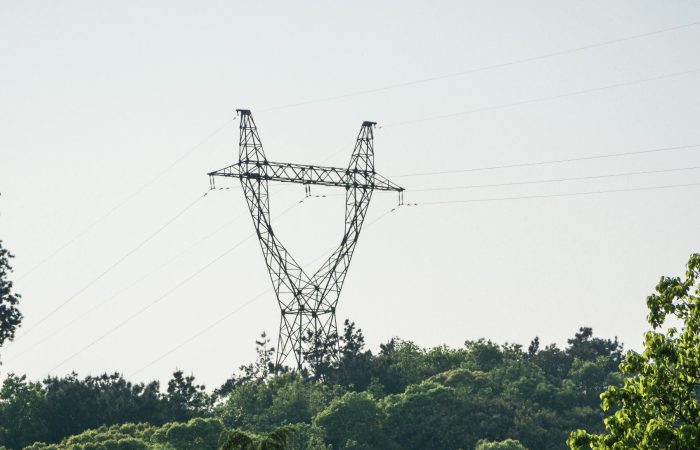
Grid access now exerts a greater influence on project outcomes than equipment selection
or installed capacity. Projects of utility scale can follow materially different delivery
pathways depending on network location and approval sequencing, with planning
approvals and grid connection processes increasingly defining the critical path for utilityscale project delivery
A clear understanding of market context supports more informed decision-making across
the project lifecycle. It allows stakeholders to identify where genuine risk resides, where
flexibility should be retained, and where assumptions require validation. In complex
infrastructure environments, early clarity often reduces downstream cost, programme
disruption, and governance challenges.
New South Wales
continues to attract the largest share of utility-scale renewable and storage investment, driven by Renewable Energy Zone rollout and system transformation.
Victoria’s Investment
profile is increasingly shaped by system security and storage-led infrastructure rather than generation alone.
Northern Territory’s
opportunity profile is driven by remote power systems, resource and defence-linked demand, and earlystage industrial decarbonisation initiatives.
South Australia
shows one of the highest relative concentrations of storage and hybrid infrastructure per capita.
Western Australia’s
opportunity profile is driven by resource-linked demand, remote networks, and industrial decarbonisation.
Queensland Remains
a strong solar-led market, with growing emphasis on storage to support scale and export constraints.
Market Signals. Project Economics. –

Grid access now exerts a greater influence on project outcomes than equipment selection
or installed capacity. Projects of utility scale can follow materially different delivery
pathways depending on network location and approval sequencing, with planning
approvals and grid connection processes increasingly defining the critical path for utilityscale project delivery
A clear understanding of market context supports more informed decision-making across
the project lifecycle. It allows stakeholders to identify where genuine risk resides, where
flexibility should be retained, and where assumptions require validation. In complex
infrastructure environments, early clarity often reduces downstream cost, programme
disruption, and governance challenges.
Request independent technical insight.

Market Signals. Project Economics.
Market signals and policy settings provide direction, but investment decisions are ultimately shaped by project-level economics.
The tool below allows users to exploreindicative sizing, capital requirements, and revenue sensitivities for utility-scale solar, battery, and hybrid systems based on current market parameters. Outputs arescenario-basedand intended to support early-stage investment screening rather than replace detailed feasibility assessment.
All outputs are indicative and based on publicly available market signals.
Results do not constitute investment advice or financial forecasts.